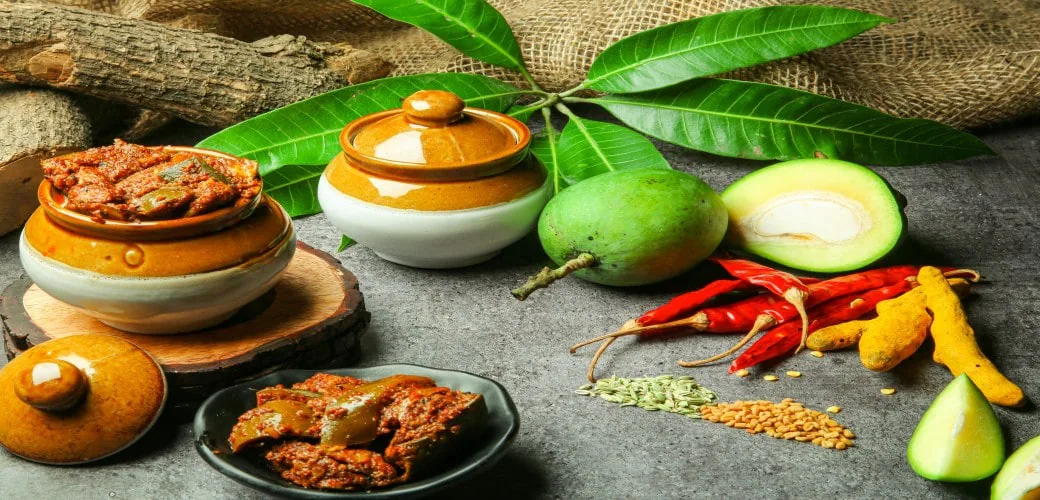
From the first kairi of summer to the year-long jar — the history, craft, regional styles and love behind India's most beloved pickle.
If Indian pickles had a royal family, aam ka achar would wear the crown without a single challenger. No wedding thali feels complete without it. No highway dhaba would dare serve parathas without a steel bowl of it. And in millions of homes, the first hot week of summer still triggers the same ancient ritual: the hunt for perfect raw mangoes.
This is the story of India's most beloved pickle — where it came from, how it is made properly, how it changes from state to state, and why one spoonful can transport a grown adult straight back to their grandmother's courtyard.
A pickle older than history
Mango pickling in the Indian subcontinent is genuinely ancient. Travellers' accounts and household manuals from centuries ago describe mangoes preserved in oil and salt, and many food historians consider mango one of the very first fruits humans ever pickled. The logic is beautiful: the mango tree gives far more raw fruit than anyone can eat, raw mango is mouth-puckeringly sour, and sourness plus salt plus oil happens to be the perfect preservation formula. Waste became wealth.
Over generations, every region, every community — and truthfully, every single household — developed its own version. The recipe was never written down. It travelled from mother to daughter, measured in handfuls and instinct rather than grams, which is why no two homes' mango pickle ever tastes quite the same, and why everyone is convinced their mother's version is the best. Everyone is right.
It begins with the kairi
Great mango pickle is decided weeks before any spice is touched — at the moment the mangoes are chosen. They must be genuinely raw: hard as stone, deeply sour, with flesh that snaps rather than yields. A mango showing the faintest blush of ripeness will turn soft and mushy in the jar within a month.
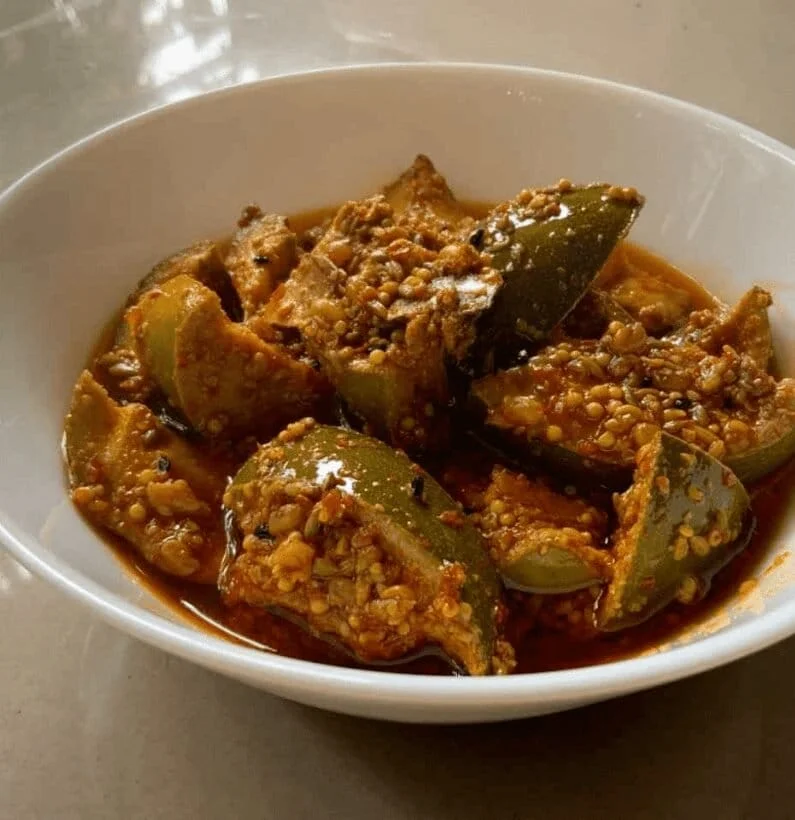
The classic pickling varieties — Ramkela most famously — are prized precisely because they hold their bite. The fruit is washed, dried completely (that dryness rule again), and cut into chunky pieces, traditionally with a bit of the hard inner shell left on to help each piece keep its shape through a year of soaking.
The five-spice backbone
A classic North Indian aam ka achar rests on a handful of whole spices, each with a job. Fenugreek (methi) brings that essential gentle bitterness which anchors the whole pickle. Fennel (saunf) answers with sweetness. Nigella (kalonji) delivers the unmistakable aroma that says "achar" from across the room. Mustard seeds bring pungency and body. Red chilli brings the fire. Salt and turmeric — the ancient preservation pair — do the guarding.
The proportions look deceptively simple, but the balance is everything. Too much methi and the pickle turns bitter; too little and it tastes hollow. This balance, more than any secret ingredient, is what a family recipe actually protects.
Sun-curing: the step nobody should skip
After the mango meets the masala and a river of cold-pressed mustard oil, the jar goes to the sunniest spot in the house — a rooftop ledge, a balcony rail, a courtyard stool. There it sits for days, brought in each evening, shaken or stirred each morning.
This is not nostalgia; it is technique. The gentle daily warmth softens the mango's fibres, drives salt deep into each piece, draws moisture out where microbes might breed, and lets the oil slowly saturate everything. Sun-cured pickle tastes rounder, keeps longer and develops that glorious deep amber colour. Factory pickles, cured in hours under industrial heat, never quite get there — and your tongue knows it immediately.
One king, many kingdoms
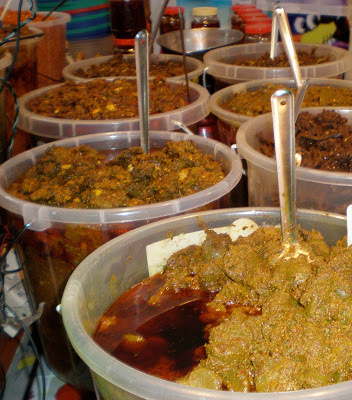
Travel across India and the king changes his robes. In Punjab, the pieces are big and bold, the mustard oil generous, the flavour hearty and rustic. In Rajasthan, the pickle leans hotter and more intense, built for a climate that demands strong flavours. Andhra Pradesh makes the legendary avakaya — mango pickle with a ferocity of red chilli and mustard powder that is practically a rite of passage. Gujarat sweetens the deal with chhundo, a grated mango preserve balanced between sweet and sour. In the South, tender baby mangoes go whole into brine as vadu mangai, tiny flavour grenades beloved with curd rice.
Same fruit, same instinct to preserve — a hundred different masterpieces. Our own recipe follows the North Indian five-spice tradition with a Rajasthani spirit: robust, warming and unapologetically homemade.
How to enjoy it properly
Purists will tell you mango pickle needs nothing but a hot paratha, and they are not wrong — the tang cutting through ghee-laden layers is one of India's perfect food moments. But the king is versatile. A piece mashed into plain dal-chawal transforms the entire plate. A little of the masala oil drizzled over khichdi is medicine for the soul. It sharpens a simple sandwich, wakes up curd rice, and stands proudly beside any thali from any state.
One tip from our kitchen: do not ignore the oil at the bottom of the jar. That spice-soaked mustard oil is liquid gold — many families guard it more jealously than the mango pieces themselves.
Caring for your jar of royalty
A quick word on keeping the king in good health, because mango pickle rewards a little care with a full year of service. Always use a bone-dry spoon, keep every piece submerged under the oil, and store the jar in a cool cupboard away from sunlight and the stove. Once a month, press the pieces down and top up with a little cooled mustard oil if the level has dropped. Skip the fridge — a properly made oil pickle was engineered centuries before refrigeration and genuinely does not need it. Treat the jar well and the last piece in month twelve will taste even deeper than the first, because mango pickle only grows wiser with age.
A jar full of memories
Ultimately, aam ka achar is not really a food item. It is a memory bank. It is grandmothers guarding rooftop jars from crows, monkeys and grandchildren with equal ferocity. It is the specific clink of the barni lid that brought everyone to the kitchen. It is dabbas packed for hostels, and jars smuggled in suitcases across oceans because no foreign supermarket version would do.
That is the taste we bottle at PanchMantra — the same patience, the same five spices, the same cold-pressed mustard oil, the same sun. The king of pickles, made the way royalty deserves, delivered to your door.